
When people ask me, “Why art?”
On the therapeutic value of the arts as medicine
This week, we are so excited to have our dear friend Emma Uebele as a guest writer on our Substack. Emma Sullivan Uebele is an Expressive Arts Therapist and Trauma-Informed Care consultant. She works globally with individuals and groups and specializes in using the arts to support those who live and work in proximity to trauma. Join her newsletter to stay in the loop and check out her work here.
Art makes visible.
We humans are awash with drives and desires. Chief among them is a deep desire to be seen. We long for our brief and beautiful lives to be witnessed and to matter. The arts offer a unique portal for seeing and being seen.
One of the fundamental qualities of art is that it is a thing which can be perceived by the senses. Seen yes, but also heard, tasted, smelled, touched, held in our own human hands.
Art not only makes both artist and subject visible to the outside world but it can also make the internal within us visible. The intangible things of life, fear, dread, despair, joy, wonder, curiosity, belonging, and heartache find form and expression in the arts. This is a necessary alchemy. A lifeline for beings often stifled by oppression, judgment, stigma, and fear. In other words: us.
Take the vibrant fiber portraiture of Bisa Butler. To me, her work says: “I am here! See me. See me in all my beauty, history, and complexity.”
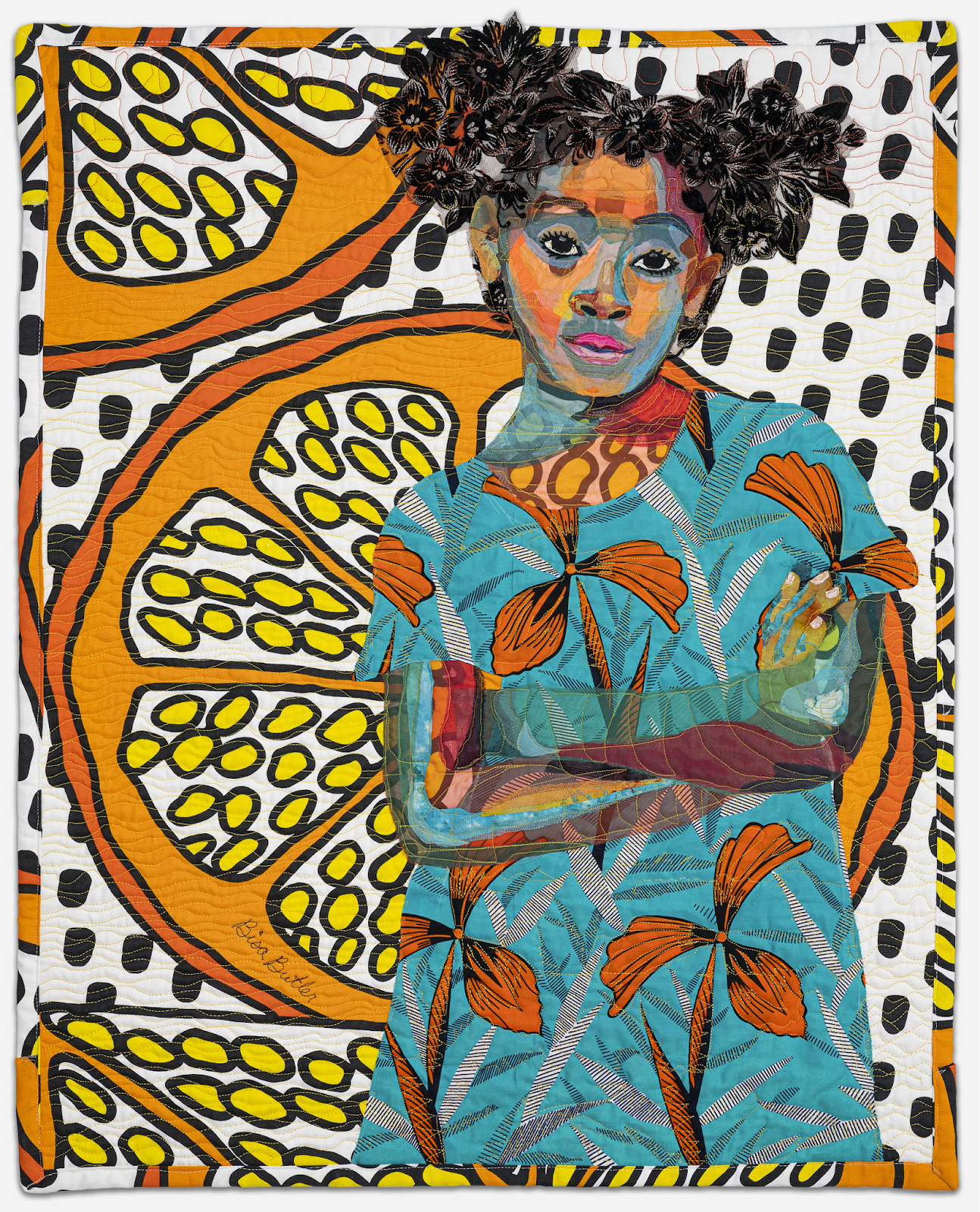
Anaya with Oranges, 2017, Bisa Butler
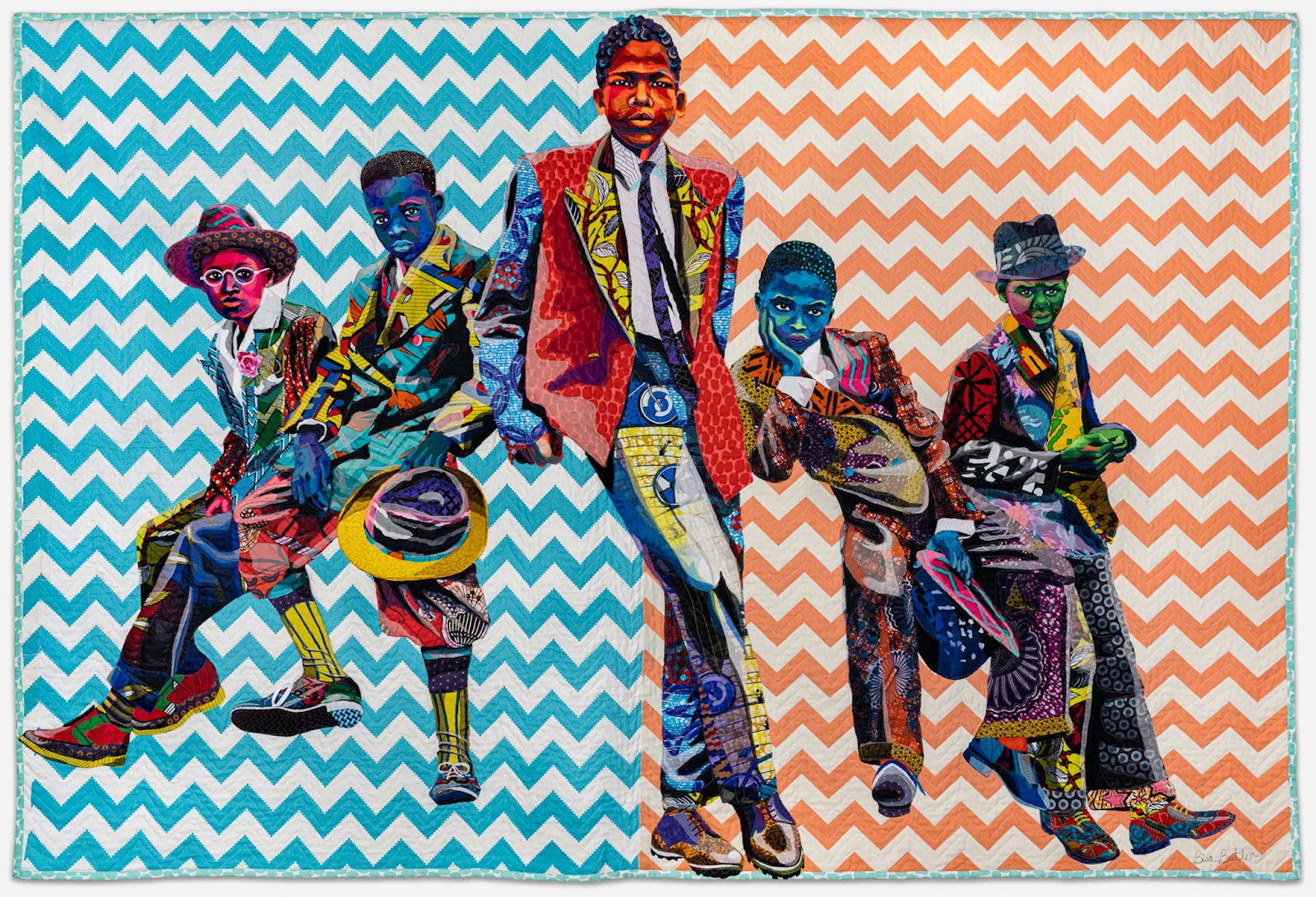
Southside Sunday Morning, 2018, Bisa Butler
Portraiture is perhaps the most direct path to visibility in the arts but it’s also there among landscape and abstraction. Sometimes we just have to be willing to look deeper than the surface.
Georgia O’Keefe says, “I found I could say things with colors and shapes that I couldn’t say any other way—things I had no words for.”
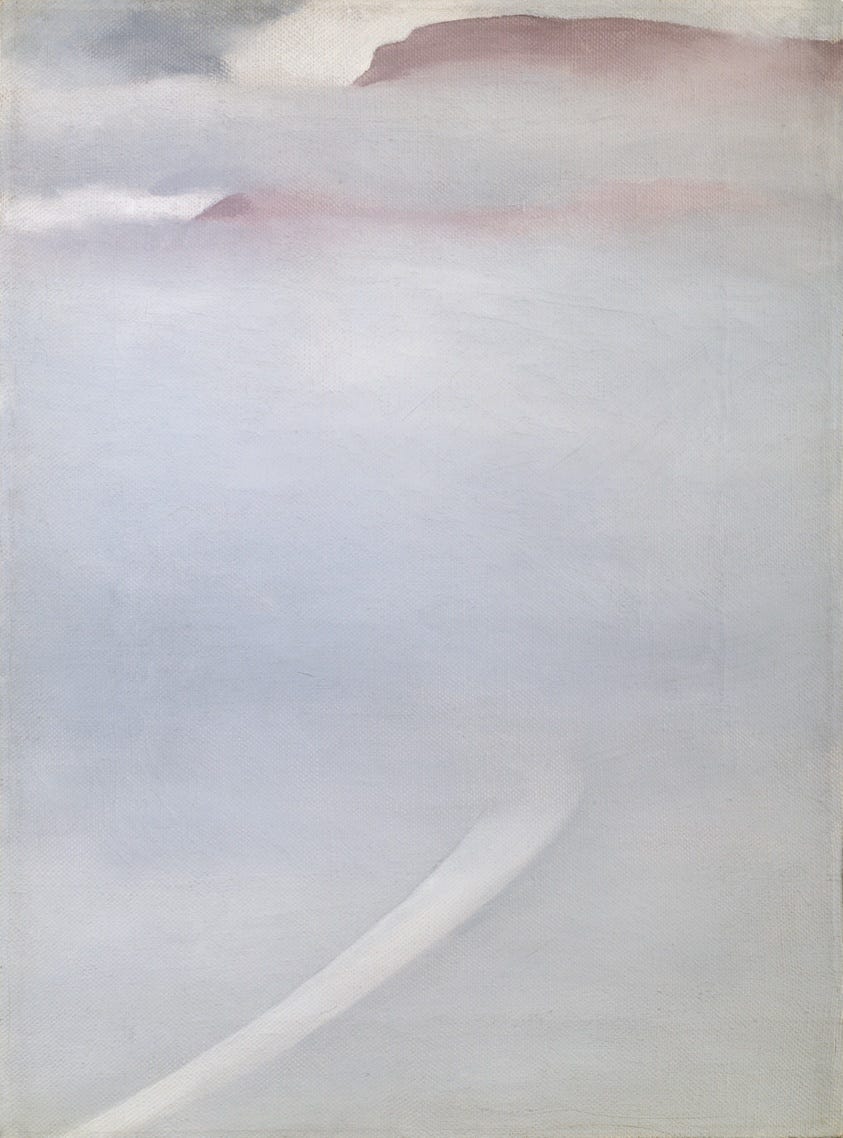
Road– Mesa with Mist, 1961, Georgia O’Keefe
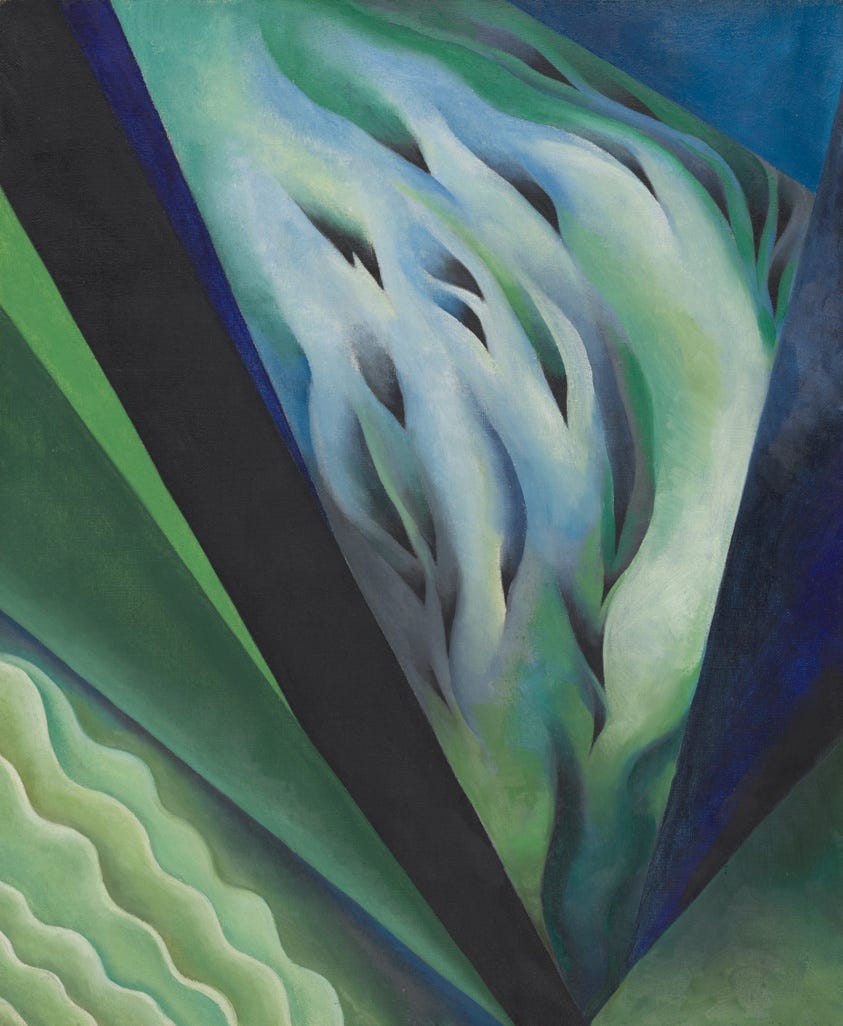
Blue and Green Music, 1919-21, Georgia O’Keefe
Of course visibility in the arts stretches far beyond visual art. Take works of science fiction like The Parable of the Sower or A Wizard of Earthsea by queens of the genre, Octavia Butler and Ursula LeGuin. They help us see ourselves, even the sides we would rather not see. Or take the gut-wrenching visibility or this poem tweeted from Gaza by writer and professor, Refaat Alareer, days before he was killed by an Israeli airstrike. Or take any song by Nina Simone or Brittney Howard & the Alabama Shakes or [insert your favorite musical artist here].
Art fundamentally re-stories.
Art asks us not only to look, but often to look in a new way or see something from a different perspective. Of course, the surrealists are a classic example of this, asking us to examine what we think we see. The Belgian surrealist René Magritte offers a classic example:
The Treachery of Images [This is not a pipe] by René Magritte, 1929.
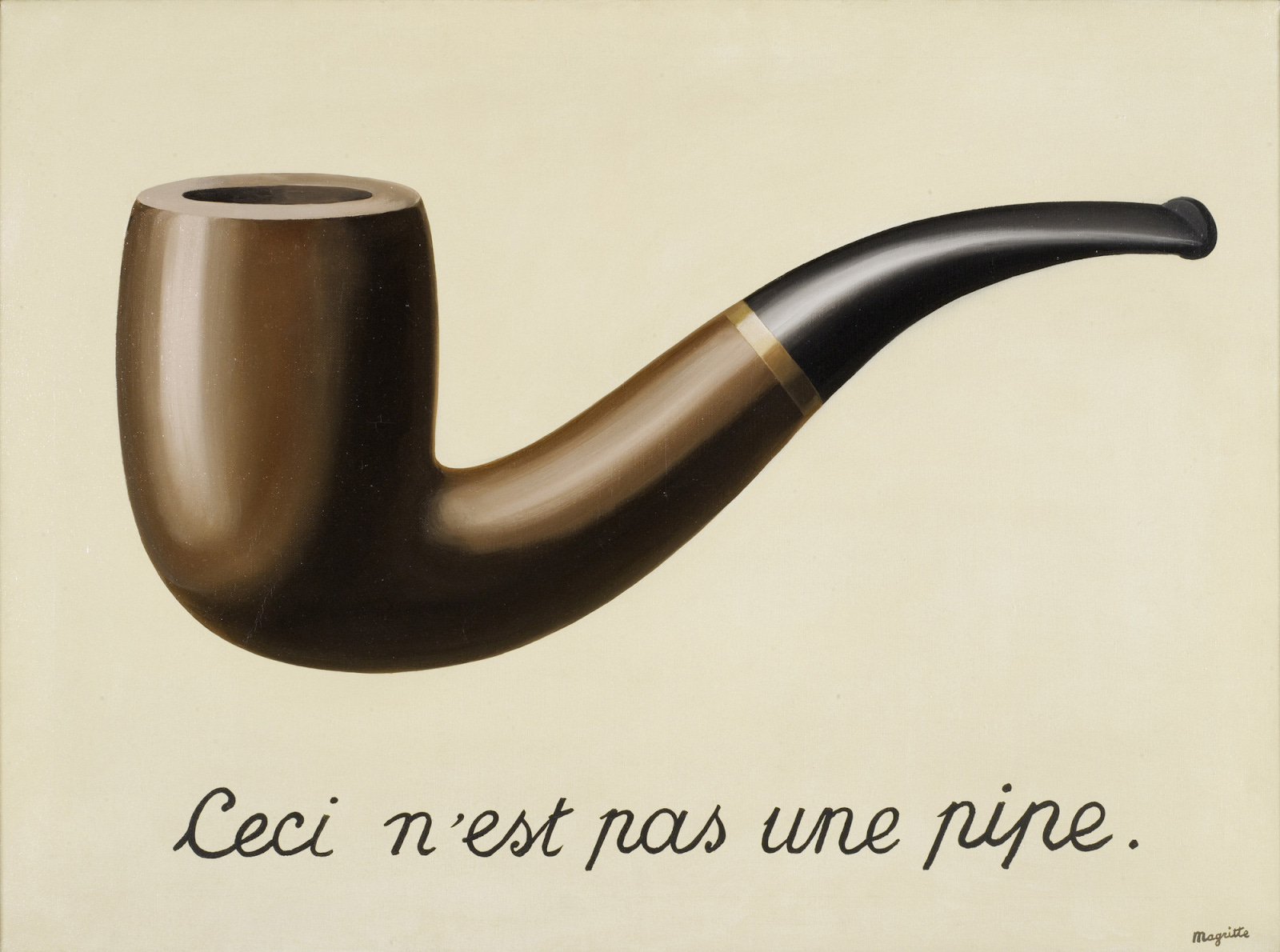
Is this a pipe or an oil painting depicting a pipe? What is the relationship between words and images? Who gets to decide what things “mean”? In a world that makes so much meaning about us without our consent, the arts are an avenue to find voice and respond with a narrative of our own. The arts, whatever form, are a way to say, “hey, this is actually how it is for me.” Coincidentally, this process of re-storying is also a large part of trauma integration and healing from a therapeutic perspective. This is what my world, expressive arts therapy, is all about.
Last week, I visited the Art Institute of Chicago to see a retrospective of the art and life of Elizabeth Catlett. It was titled: “A Black Revolutionary Artist and All That It Implies.” If you are remotely near Chicago, I cannot recommend this exhibition highly enough. Elizabeth Catlett (1915-2012) was a monumental force in both the American and Mexican art worlds of the 20th century. Catlett was a true artist-activist. Born to freed slaves in Washington, DC and settling in Mexico in 1946, her work champions the disenfranchised and calls out racism, imperialism, and injustice. Her subjects range from sharecroppers to campesinos to Black mothers to Angela Davis. Catlett worked in many art forms, from printmaking to flawless sculptures in mahogany and bronze. She was an absolute force for challenging narratives and re-storying.
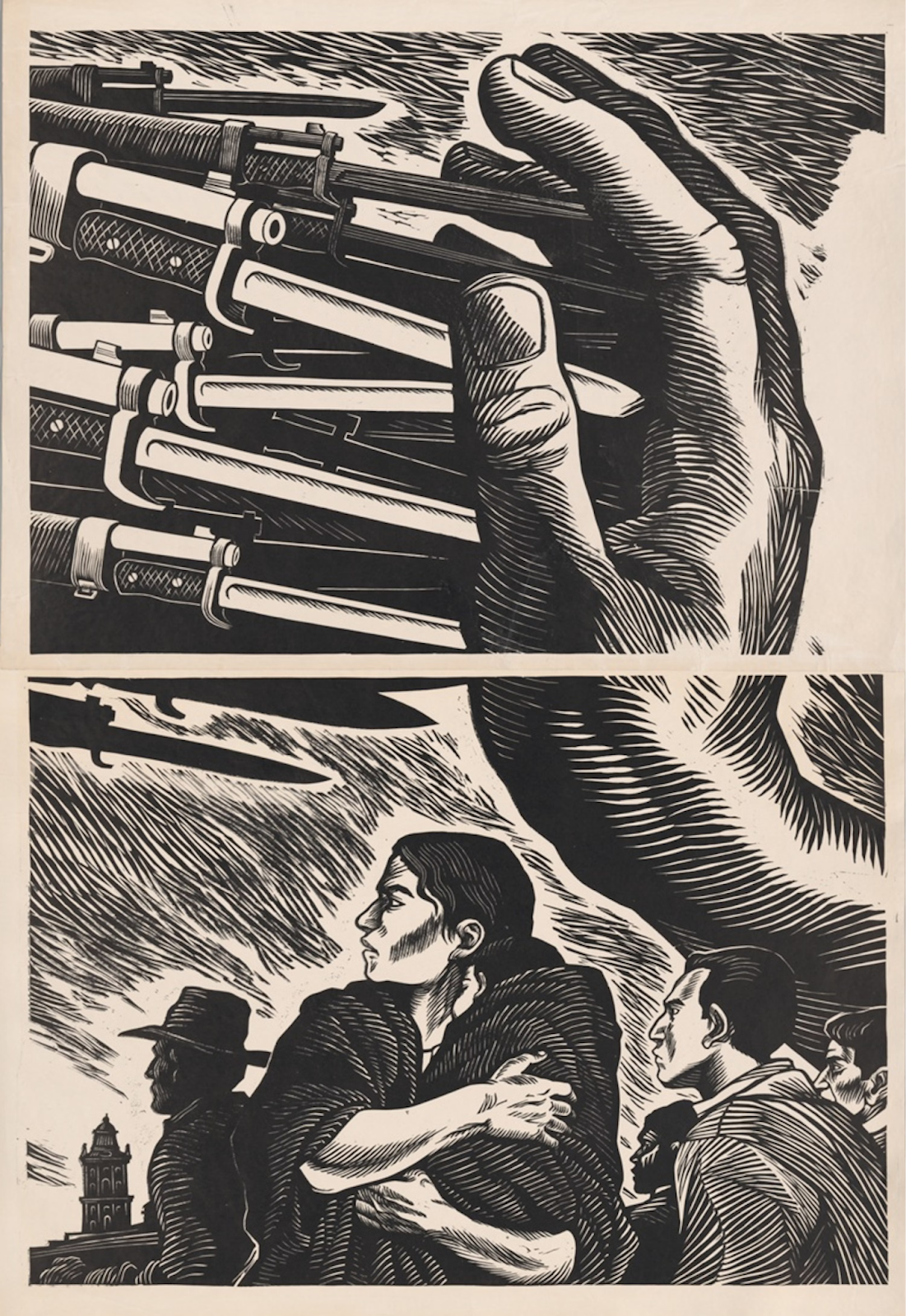
Untitled (Composition for a Peace Poster), about 1950, Alberto Beltrán and Elizabeth Catlett
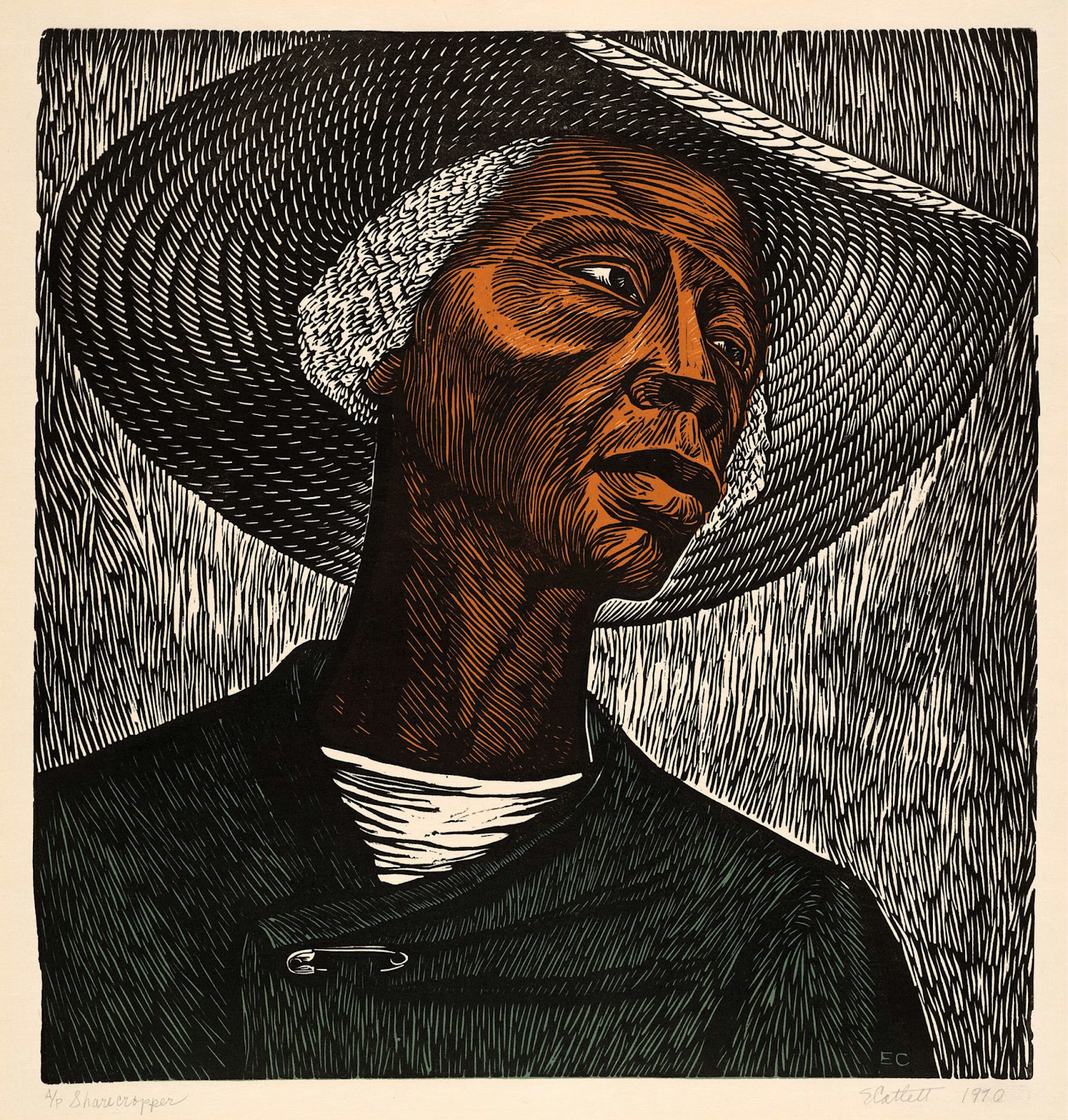
Sharecropper, 1952, printed 1970, Elizabeth Catlett
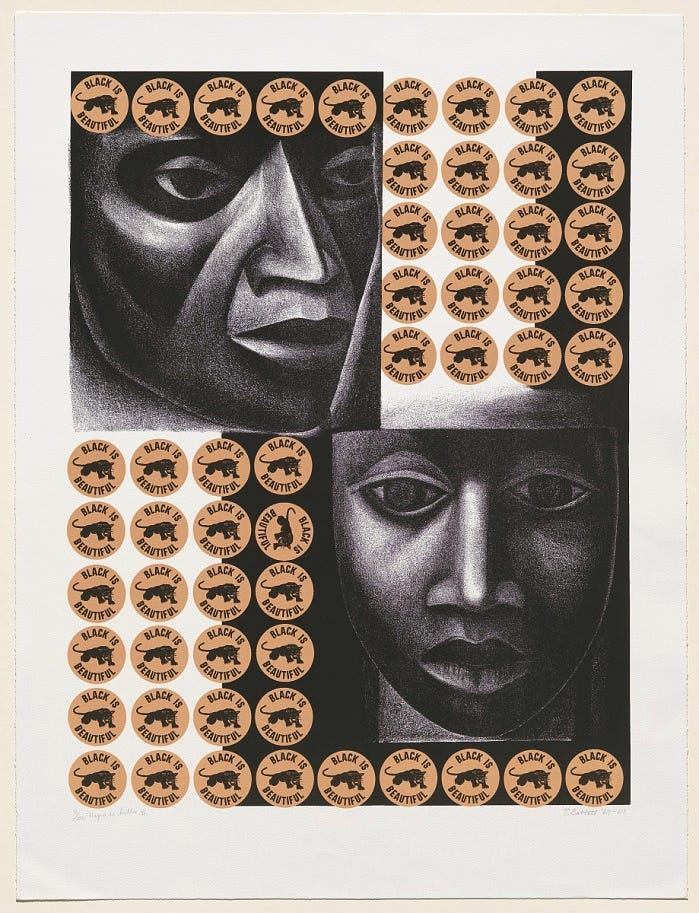
Negro Es Bello II, 1969; printed 2001, Elizabeth Catlett
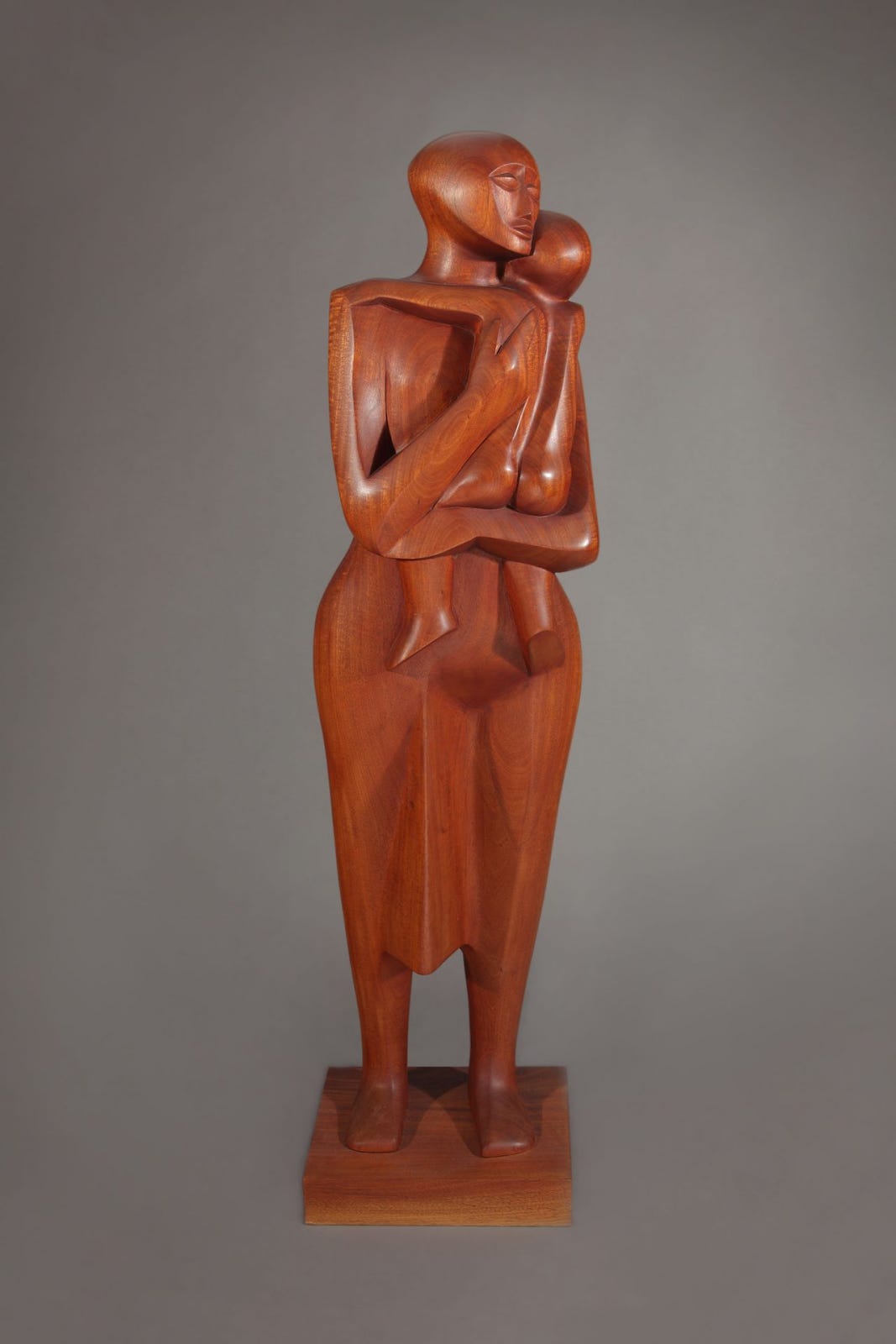
Mother and Child, 1983, mahogany, Elizabeth Catlett
Art enlivens the imagination. Hope is an act of imagination.
Art, whatever form, can make visible awaited realities. Like all things, this can be used for good or for evil. Art can affirm life and hope and possibility, and art can lead us down the path of despair and destruction. Sometimes, all of those in the same moment.
A vital capacity of art, especially in this moment we find ourselves, is to help us imagine the future. As a professor of mind was fond of saying, “Once you can imagine it, it is already different.” The imagination is our pathway to hope. After all, hope itself is an act of imagination: believing against any odds that another reality is possible. In a world with so much destruction and devastation we must protect and nourish this great gift, this innately human capacity. In the most dire of circumstances, in spaces of injustice and oppression, imagination can let a crack of light in. It can reinspire us to keep going, yes, but also to go in a new way.
I have had the great privilege of seeing the alchemy of imagination time and time again in my work. Sometimes this has been in the mundane difficulties of life we all face, and sometimes in the aftermath of genocide, dangerous migration, and war.
Several years ago, I worked on a project at a mental health clinic in Eastleigh, a neighborhood of Nairobi referred to as Little Mogadishu. I would consider Eastleigh a difficult place to live. There are widespread street gangs, poverty, and regular extrajudicial killings carried out by the police. I also heard Eastleigh referred to as paradise, without a note of irony, by a young Somali camel farmer.
On this project, we spent five weeks working with Somali youth who had crossed into Kenya with hopes of further migration, freedom, and stability. Our program centered on psychoeducation and utilizing arts and body-based interventions to manage PTSD and the challenges of chronic trauma exposure and instability.
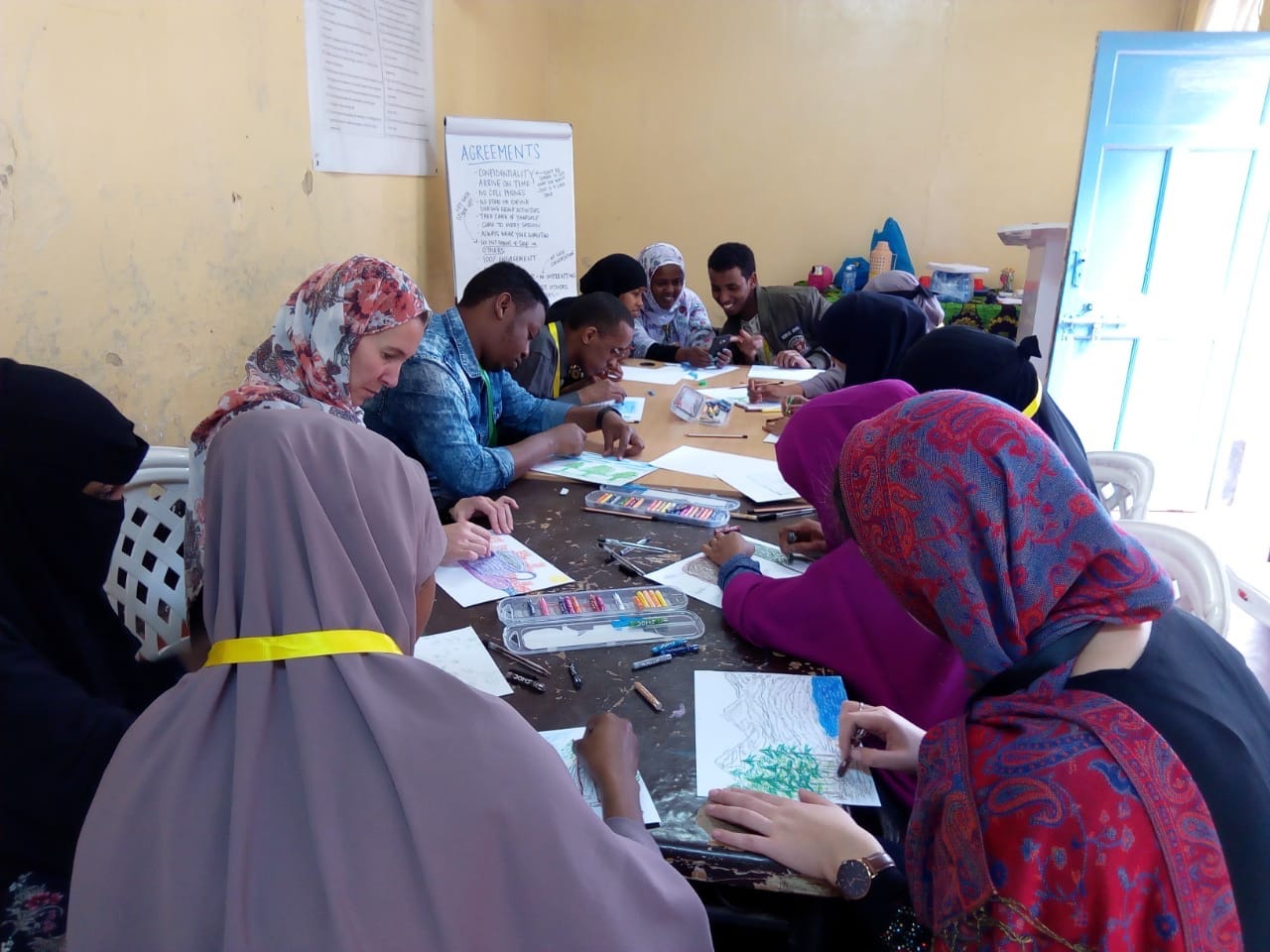
One day, we moved the tables and chairs, and we time-traveled. We lined up on one side of the room in the present, and ran across the room to the other side, where it was 5 years in the future. We told stories, in the present tense, about what life was like. How our families had grown, where we lived now, what changes we had seen:
I live in Mogadishu, it is green and beautiful. The war is over. I am a world-class soccer player but I just retired and have become the president of Somalia. Today is the grand opening of my library in Mogadishu. I am building a new hospital. I just returned from hajj with my mother. I am sending all of my siblings to university. I have four children. I have four wives. I live in Sweden with my mother. I made it to America. I am happy and in love with my handsome husband; I am his only wife.
We laughed and cheered and congratulated one another’s accomplishments. Then, we ran back across the room to the present. We captured these memories of the future. We drew and painted and wrote the stories of the future. We lined our pockets with bright kernels of hope.
It’s been over five years since I time-traveled in that room and I still think of it often. I don’t know if any of these hopes have borne fruit yet. I often wonder where they all are, what their lives are like now. I find myself holding their kernels of hope.
Time travel is really quite simple. You must suspend the cynicism and despair and commit to imagining what could be different, what could be better. You have my permission to take this exercise for yourself. Imagination takes practice. Especially if life has been unkind or you were scolded for being a dreamer or doodler or playing too long.
If you can, stand up at your computer or with your phone. Take a look at the present around you. Then make your way across the room five years in the future to 2030. What is it like there? Has the old, empty gas station on your corner been replaced with a verdant urban garden? Is there enough food for everyone in your town? Are you making more art? Tell someone what it’s like in your 2030. You get to build these future memories. Make them beautiful, let the vision sustain you in its own small profound way. I’ll see you there.
With gratitude,
Emma